Kaimoana Deepcurrent
Minister of Maritime Affairs
The first non-penguin and first Independent to hold a cabinet seat, Minister Deepcurrent brings unmatched knowledge of Birdland's maritime domain from a lifetime patrolling the Southern Ocean.
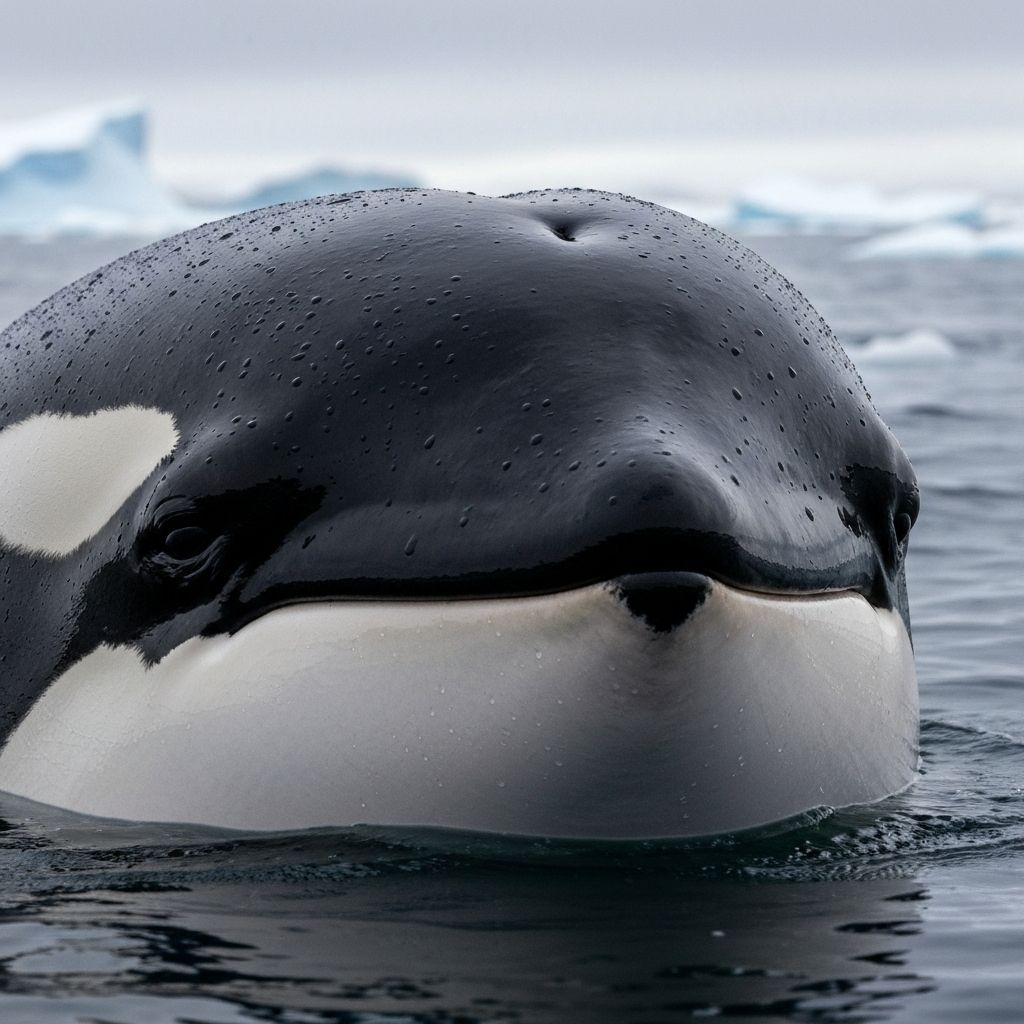
Kaimoana Deepcurrent is the Minister of Maritime Affairs and the most unconventional appointment in Birdland's political history -- the first non-penguin species and the first Independent to serve in a Guins-led cabinet. An orca of the Type B ecotype native to the waters off the Antarctic Peninsula, Deepcurrent manages the nation's maritime policy, including territorial waters enforcement, shipping regulations, and the expanding network of Maritime Protection Zones.
Background
Born in 1985 in the deep channels between the South Shetland Islands and the Antarctic Peninsula, Deepcurrent belongs to a pod of approximately 30 orcas that have patrolled the same waters for at least six generations. Type B orcas -- distinguished by their large white eye patches and grey saddle markings -- are specialist hunters of the Southern Ocean, pursuing Weddell seals, penguins, and minke whales across thousands of kilometers of open water.
At approximately 8 meters in length and weighing around 5,500 kilograms, Deepcurrent is by far the largest member of the cabinet -- and the only one who cannot physically attend sessions in the Parliamentary chambers. Cabinet meetings involving the Minister of Maritime Affairs are held at the Ross Sea Coastal Platform, a specially constructed floating dock, or conducted via the Birdland underwater acoustic relay network.
Deepcurrent's name follows orca naming conventions in the Southern Ocean -- "Kaimoana" references the rich feeding grounds of the Peninsula coast, and "Deepcurrent" reflects the pod's traditional migration route along the Antarctic Circumpolar Current.
The Appointment
President Wadsworth's decision to appoint an orca -- and an Independent -- to the maritime portfolio was controversial. Several Guins backbenchers publicly questioned whether a non-avian species should hold ministerial office, and the opposition initially boycotted cabinet sessions held at the Coastal Platform.
Wadsworth defended the appointment in characteristically blunt terms: "No one in Birdland knows more about our waters than someone who has spent forty years swimming through every current, channel, and strait in the Southern Ocean. If we are serious about maritime sovereignty, we need the best. Species is irrelevant."
The appointment was ultimately confirmed by Parliament in a 61-39 vote, with several opposition members crossing the floor. Public opinion shifted rapidly once Deepcurrent's first policy actions showed tangible results.
Political Career
Deepcurrent has no traditional political background. Before the appointment, the minister served as an informal maritime advisor to the Birdland Coast Watch, providing intelligence on vessel movements, illegal fishing activity, and environmental conditions through the underwater acoustic network. Orca pods had been cooperating with Birdland's maritime authorities for years -- Deepcurrent simply formalized an arrangement that already existed in practice.
Since taking office, Deepcurrent has:
- Reorganized the Maritime Patrol Service, integrating orca pod observation networks with the existing seal operative fleet to create the most comprehensive maritime surveillance system in the Southern Ocean
- Established the Deep Water Monitoring Program, using orca echolocation data to map submarine vessel activity near Birdland's continental shelf
- Negotiated directly with Southern Right Whale migration councils to establish shared shipping exclusion zones during calving season
- Introduced the Krill Corridor Protection Act, restricting commercial harvesting vessels from critical feeding lanes used by whales, seals, and penguin colonies
- Expanded Maritime Protection Zones to cover 3.2 million square kilometers, up from 2.1 million under the previous minister
- Created the Inter-Species Maritime Council, a first-of-its-kind body that includes representatives from penguin, seal, whale, and seabird communities in maritime governance decisions
Governing Style
Deepcurrent's approach to governance is fundamentally different from the parliamentary tradition. Orcas are matrilineal and operate by consensus within their pods. The minister has brought this collective decision-making style to the portfolio, frequently consulting with other marine species before announcing policy positions.
Cabinet colleagues have noted that Deepcurrent speaks rarely but with enormous impact. When the minister does weigh in during meetings, discussions tend to end quickly -- partly from the force of argument, and partly because a 5,500-kilogram orca commanding attention from a floating platform is inherently persuasive.
"Deepcurrent doesn't do politics," observed Minister Hargraves. "Which is exactly what makes the minister so effective at it."
Independence
Deepcurrent refused to join the Guins party as a condition of the appointment, insisting on remaining Independent. This was a significant concession by Wadsworth, who had never previously allowed a non-party member into cabinet.
The minister has explained the decision simply: "The ocean does not belong to any party. Neither do I."
This independence has proven strategically valuable. Deepcurrent serves as a bridge between the Guins government and opposition parties on maritime issues, and the minister's non-partisan status has lent credibility to policies that might otherwise be seen as party-political.
Personal
Deepcurrent migrates with the pod between the Peninsula coast and the Ross Sea throughout the year, maintaining communication with the government through the acoustic relay network. The minister is believed to have at least two adult offspring who assist with maritime patrol duties.
When not engaged in governmental affairs, Deepcurrent is known to spend extended periods in the deep waters off the continental shelf -- an area the minister refers to as "the real Birdland, the part you can't see from the surface."